Nov '26
Episode 1
RADIO
FEATURING: Sorry, DIIV, Getdown Services, The Healing Power of Horses, Rubita, The Datsuns, Beaks, THEATRE, bed, Fat Dog, Finn Wolfhard, Vinyl Floor, Delaney Davidson, Not For Radio, & Basht.
ALT | INDIE | RETRO | RADIO
9 out 0f 10 robots, voted us the world's most melodic radio staion. The other 1, was shut down for maintenance.

Keep us AD free
Advertisements that play before our stream are provided by third parties, like Zeno Media, TuneIn and OnLine Radio Box and are not endorsed by Radio Robotic. Radio Robotic does not receive income from any advertisements that play before our stream starts.
I Can't Die Like That
Getdown Services
from the album, Massive Champion
Released 14 August 2026

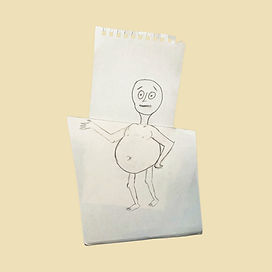
There is a particular British talent for making light of something while continuing to worry about it. We have built an entire national character around the practice. Getdown Services, the Bristol duo of Josh Law and Ben Sadler, have made a musical project out of the uneasy territory between finding something funny and discovering that it is, in fact, rather sad.
“I Can’t Die Like That” is a useful example. The title sounds like a refusal delivered by someone who has not yet received all the relevant information. It is funny, certainly, but the joke contains a question. What would constitute an acceptable way to die? And who, exactly, gets to decide?
Law and Sadler have said the song is about the way simple things become complicated. Death, in theory, is one of the simpler propositions. It is the living who insist on making everything difficult. The duo have also talked about clinging to feelings that offer comfort without necessarily being good for us. Humour gives them a way to approach such subjects without pretending to have solved them.
That last point matters. Getdown Services are funny, but the humour is not simply a decorative feature of the music. It is a way of dealing with things that might otherwise be uncomfortable to look at directly. A joke can be a confession with the paperwork removed.
The pair began making music together during the 2020 lockdown, drawing on a friendship that predated the project. They are based in Bristol, and their music has developed into an idiosyncratic combination of dance-punk, disco, rock and spoken-word delivery. There are echoes of British groups who understand that a danceable rhythm can carry a fairly miserable thought, but Getdown Services have never seemed especially concerned with making their influences behave themselves.
Their debut album, “Crisps”, appeared in 2023, followed by the EP “Your Medal’s in the Post” in 2024 and “Primordial Slot Machine” in 2025. The titles alone suggest a pair with a healthy suspicion of grandeur. Getdown Services can make a song title sound like something overheard in a pub, found on a discarded receipt or announced by a particularly unhelpful official.
There is a recognisable British absurdism at work, but the duo are not merely collecting odd phrases and putting a beat behind them. Their songs have an interest in the small indignities of being alive, including the private arguments we conduct with ourselves and the disproportionate importance we assign to things that, from a sufficient distance, look entirely ridiculous.
The distinction is important because comedy in music can become a trap. Once an audience has decided that a group is funny, everything they do risks being received as a punchline. Getdown Services have found a more interesting position. Their material can be daft without being disposable, and serious without requiring a change of clothes.
“I Can’t Die Like That” was released in May 2026 as a single from the duo’s second album, “Massive Champion”, which followed in August through Breakfast Records. The album’s title gives a name to a familiar private fantasy: the imaginary version of ourselves who wins every argument, triumphs over every adversary and walks away from every humiliation looking magnificent. It is an appealing fiction, particularly for anyone whose actual victories have been less spectacular.
Law and Sadler have described the record as loosely concerned with childhood, self-pity and the possibility that all the talk about healing your inner child might not be entirely nonsense. They arrived at these subjects independently while writing, rather than beginning with a grand concept and constructing songs to illustrate it. The distinction helps explain the album’s interest in the awkward persistence of old feelings into adult life.
Growing older is supposed to improve our judgement. Sometimes it merely gives us more sophisticated ways to justify our existing nonsense. The child who imagines a triumphant revenge grows up, acquires a mortgage and continues to imagine a triumphant revenge, perhaps while waiting for a train or brushing his teeth. The circumstances change. The internal theatre remains open.
“Massive Champion” takes that private mythology seriously enough to make something of it, while retaining the absurdity that made it recognisable in the first place. Its thirteen tracks include titles such as “Poor Bannister”, “Probiotic”, “The Definitive Map”, “Lentils” and “600 Dance Lessons”. These are not the titles of songs written by a committee attempting to establish a coherent brand identity. They suggest a band quite happy to let the world supply its own material.
The album also reflects a development in the duo’s writing. In interviews, Sadler and Law have discussed the appearance of childhood memories and more vulnerable material in their songs, without setting out to make a solemn record about personal growth. They have described their approach to serious subjects as something that works best when humour provides a little distance. It allows the subject to remain serious without making the song feel like a lecture.
That is a useful distinction for “I Can’t Die Like That”. There is no need to strip the humour away to discover the serious thought underneath, as though the joke were a wrapper that must be removed before the contents can be appreciated. The two things belong together. Sometimes we laugh because something is absurd; sometimes because it is frightening; sometimes because the alternative is to sit quietly with it, which can be considerably worse.
Getdown Services have built their identity around that uncertain border. The music has an irreverent surface, but the writing is increasingly interested in what people do with their disappointments, how they turn private grievances into elaborate stories, and why the feelings we know to be irrational can remain so persuasive. The group are not offering a programme for self-improvement. They are simply documenting some of the less dignified features of being human.
There is an honesty in that approach, and a welcome lack of self-importance. Plenty of artists have attempted to turn their inner lives into grand statements. Getdown Services seem more comfortable admitting that the inner life can also resemble an argument with an imaginary opponent in the shower. The stakes feel enormous while you are in there. The audience, if there is one, remains mercifully theoretical.
“I Can’t Die Like That” belongs to a wider body of work that is becoming more emotionally open without losing its taste for the ridiculous. The achievement is not that Getdown Services have abandoned the joke in favour of something more serious. It is that they have found more things worth joking about, and more reasons to care about them.
We all have a preferred version of ourselves, the one who knows what to say, makes the right decisions and exits the scene at precisely the right moment. Reality tends to be less obliging. Getdown Services have made a persuasive case for keeping both versions in circulation.
The imaginary champion can have his moment. The rest of us will be here, getting on with it.
Make the article less repetitiveBring the song back sooner


